
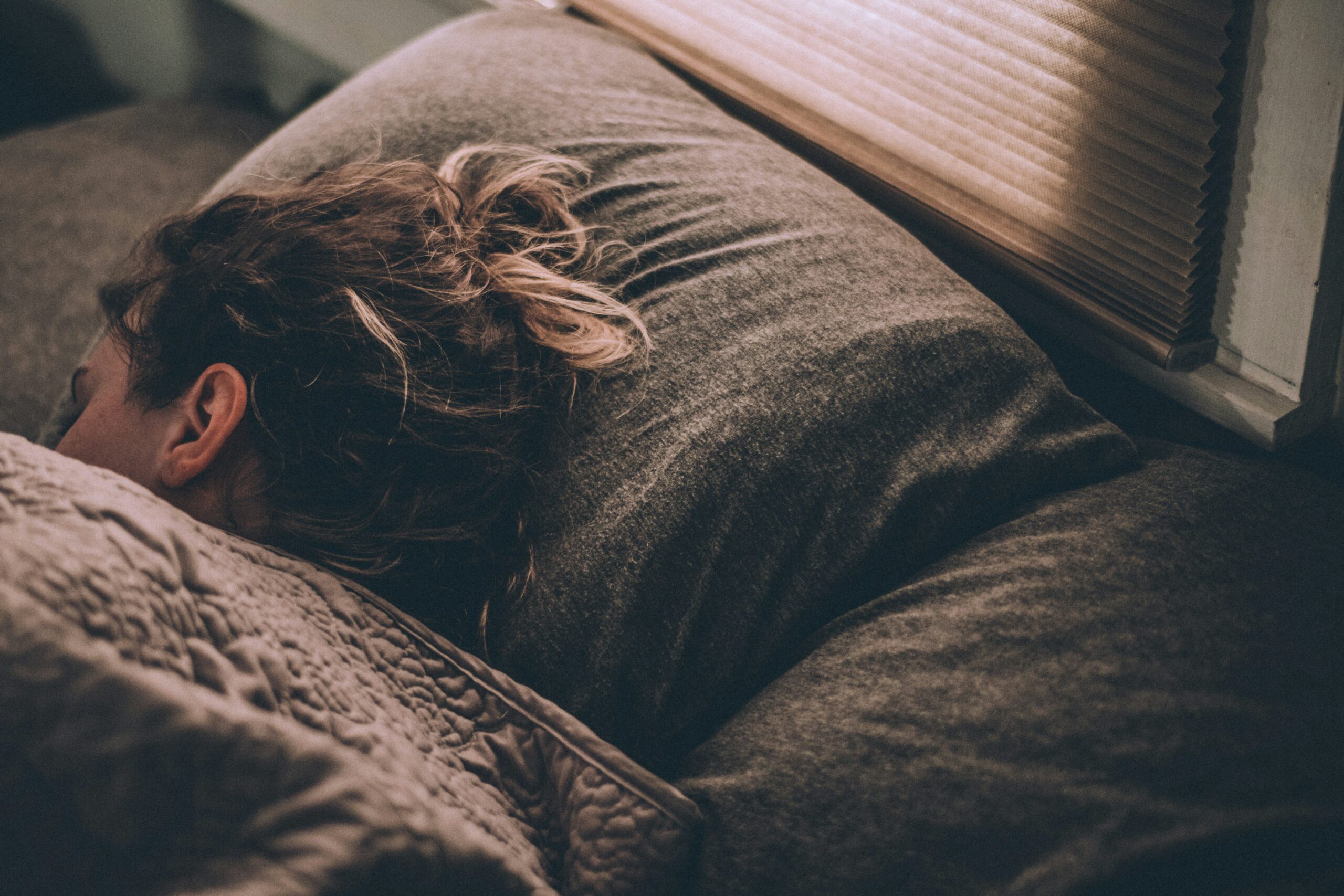
Sleep.
Over the last month, I’ve noticed a common theme coming up in conversations with clients — a lot of us aren’t sleeping particularly well.
Mentally and physically, we can struggle with poor sleep. Add chronic pain, injury, inflammation or stress into the mix and we can create a vicious cycle.
Your body releases a significant amount of growth hormone during deep sleep, which plays an important role in tissue growth and repair. Sleep is also important for recovery, immune function, memory and regulating many of the body’s systems.
I’ve noticed that when sleep improves for some of my clients, so do some of their major symptoms.
So why not take advantage of it?
Here are a few things I’ve experimented with that have helped me improve my own sleep:
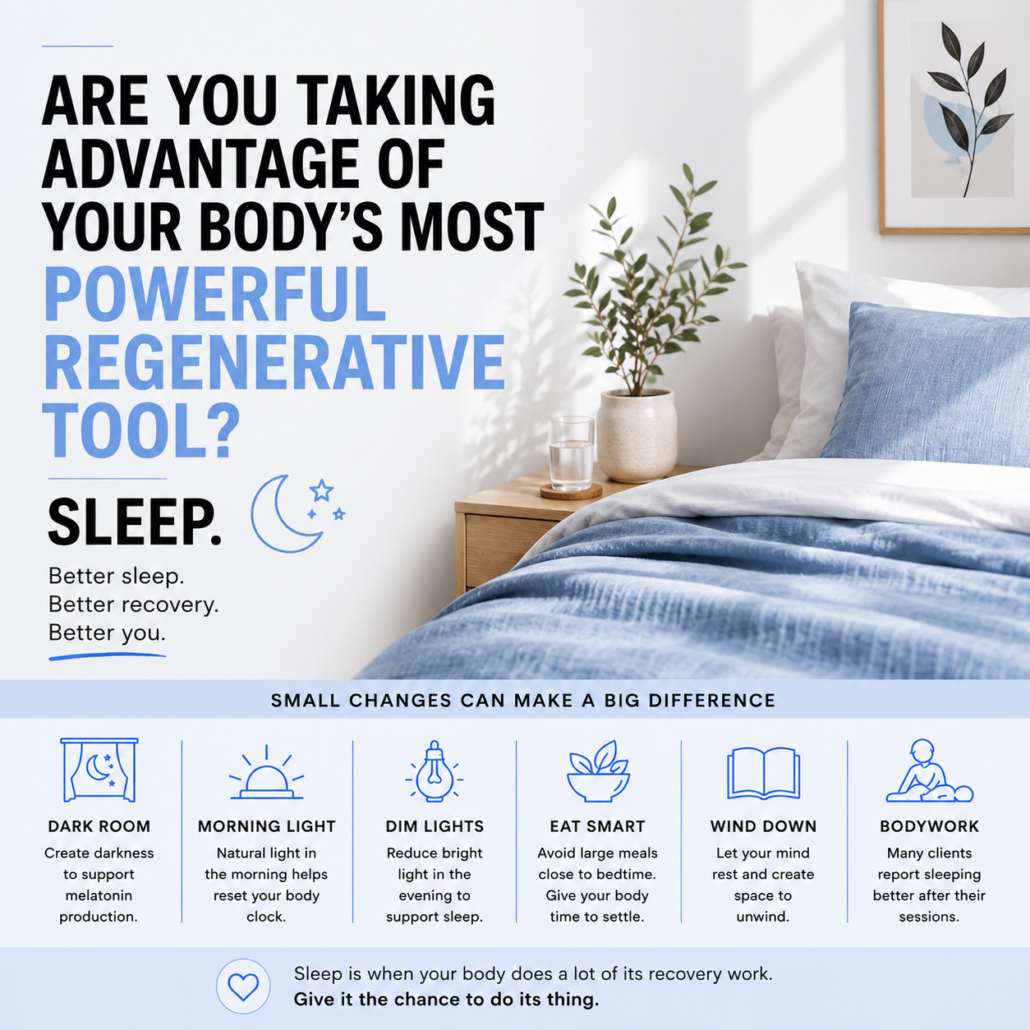
- Blackout blinds – Create a dark environment. Melatonin is a hormone produced by the pineal gland and its release is strongly influenced by darkness. I try to block out as much unnecessary light as possible, including lights from devices and TVs.
- Morning light – Get outside in the morning. Natural light is one of the strongest signals for your circadian rhythm and can help keep your body clock aligned with the day-night cycle. A morning walk is an easy way to do this.
- Dim the lights at night – Have you noticed how many houses are lit up like a hospital at night? Bright light in the evening can interfere with the body’s natural preparation for sleep. I personally like using warm, dim or red lighting in the evening. You don’t necessarily need red lights — the important part is reducing bright light as you get closer to bed.
- Food – I try to avoid having a big meal right before bed. Everyone is different, but eating heavily late at night can make it harder to sleep, particularly if you experience digestive discomfort or reflux.
- Let the mind rest – This one is probably the hardest. No phones, work or stressful activities right before bed if you can help it. Instead, try reading, relaxing, meditating, journaling, spending time with a loved one or simply winding down for the day.
What about supplements?
This is where I’ll add a disclaimer: I’m not a doctor or dietitian, and I’m not recommending supplements. I’m simply sharing my own experience and things clients have told me they’ve experienced.
- Magnesium – I’ve experimented with magnesium myself and, interestingly, I found it stimulating rather than calming. Some people report the opposite.
- Glycine – I’ve also experimented with glycine and personally found it helped me fall asleep faster and improved my sleep quality.
If you’re considering supplements, especially if you’re taking medication or have an existing health condition, speak with your doctor.
- Sauna – I’ve also found a sauna in the evening interesting for winding down. There is some evidence that passive heating before bed may help with sleep, although the research is still developing.
And finally… bodywork.
Most of my clients report that they sleep much better after their sessions 😉
I can’t say that bodywork causes better sleep, but I find it interesting how often people tell me they feel more relaxed and sleep better after treatment.
Maybe we’re all just looking for the same thing:
Give the body the opportunity to recover, and see what happens.
Thanks for reading,
– Lewis