I see lower back pain almost every day in the clinic.
In fact, around 1 in 6 Australians were reported to have chronic back problems in 2014–15. I’ve been one of them, so I know that cycle of guarding and worrying.
There’s a great Aussie pain scientist named Lorimer Moseley who talks about how pain can be the body’s protective response.
When my back was at its worst, the mental weight of it made the physical tightness feel so much sharper.
But we can actually work on building confidence in movement. We can do a lot before giving up, and for me, it starts with building confidence in my stability.
Why the Bird Dog?
It’s not about getting a six-pack, but it is a great way to challenge your core and trunk stability. Instead of crunching, your muscles are working quietly to keep you stable while your arms and legs move.
The Bird Dog teaches the body to coordinate the upper and lower body through a diagonal pattern. When you reach your opposite arm and leg, your trunk has to work to keep your pelvis and spine controlled.
For me, that’s the interesting part: your limbs are moving while your middle stays relatively quiet.
How to set it up:
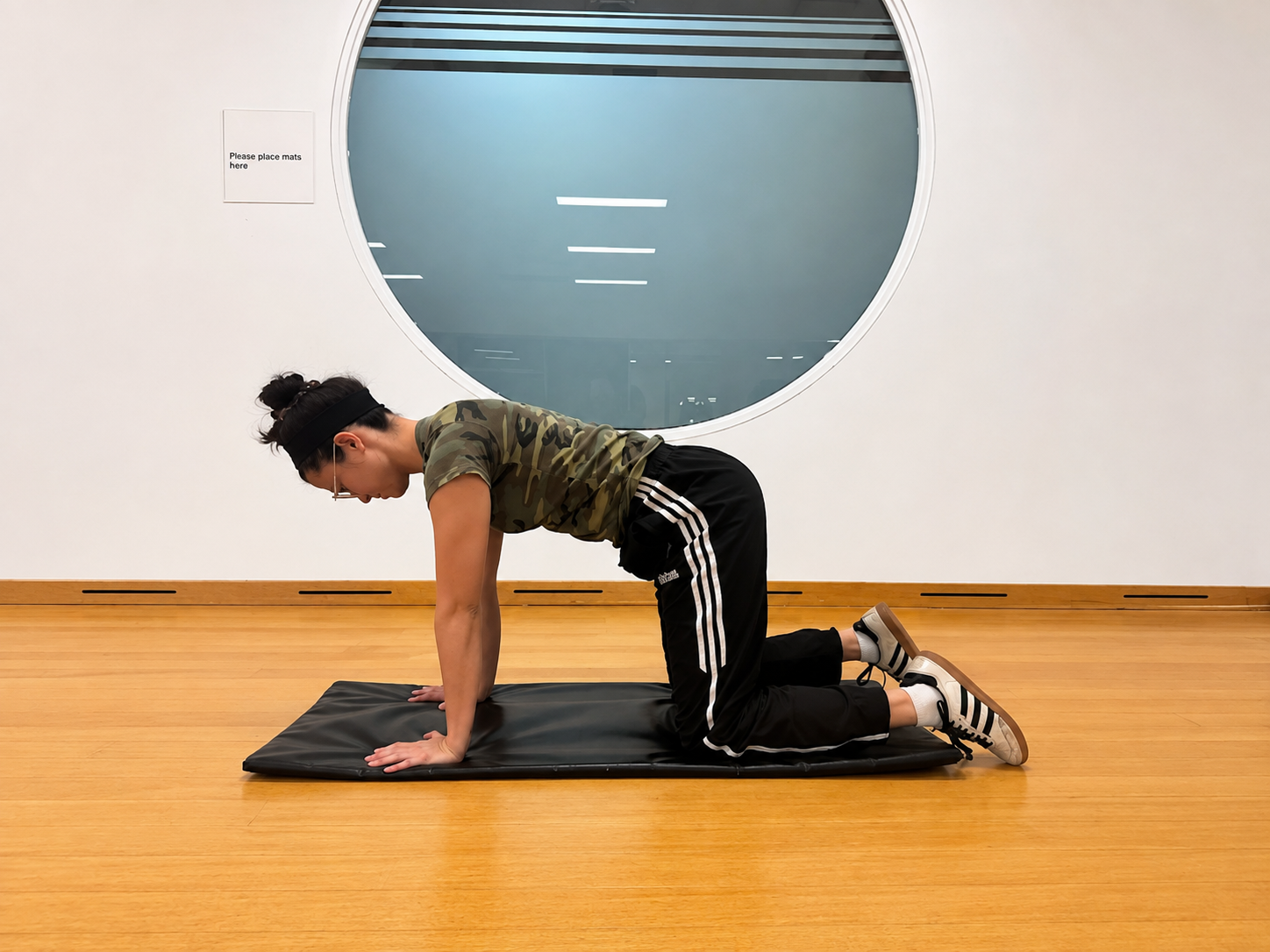
Get on all fours with your hands under your shoulders and your knees under your hips. Think of your back as a sturdy, level tabletop.
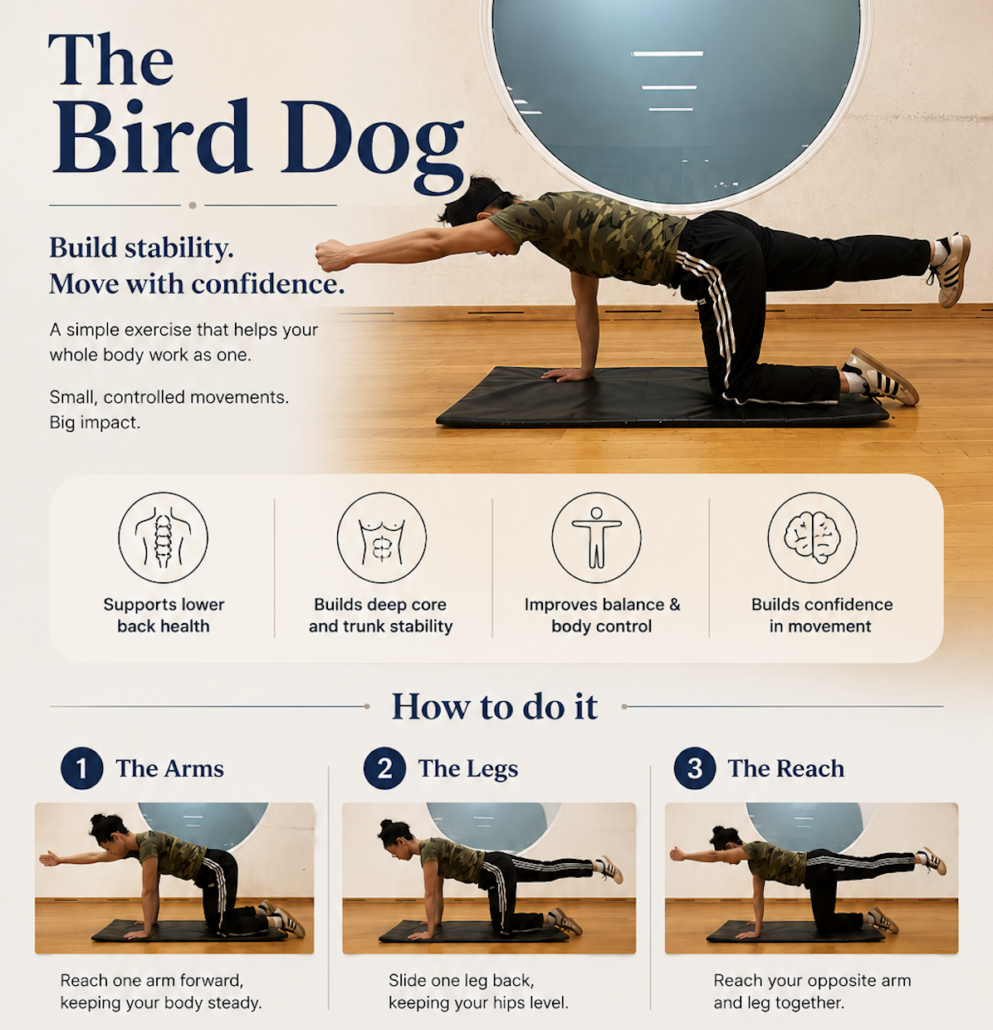
1. The Arms: Make a fist and reach one arm forward, roughly level with your shoulder. Keep your torso from rotating or leaning as you reach. Bring it back and try the other side.
2. The Legs: Slide one foot back and reach the leg away from you, keeping your hips level. Think about lengthening through the heel rather than lifting the leg as high as possible.
3. The Reach: If you feel steady, join the two movements together and reach the opposite arm and leg at the same time.
The Priority
Your only job here is to imagine a level bowl of water resting on your lower back and move your limbs without spilling a single drop.
The movement should come mainly from the hips and shoulders while your middle stays controlled.
If you feel a wobble, just make the movement smaller. A tiny, controlled reach is way better than a big, clunky one.
And watch that you don’t lift your heel too high towards the ceiling. The goal isn’t to get your leg as high as possible — it’s to maintain control through your pelvis and lower back while you move.
It’s a simple move, but it’s one of my favourites for getting the whole body communicating as a single unit again.
If you are dealing with that frustrating cycle of back pain and stiffness, sometimes your body needs a bit of hands-on help to break the cycle.
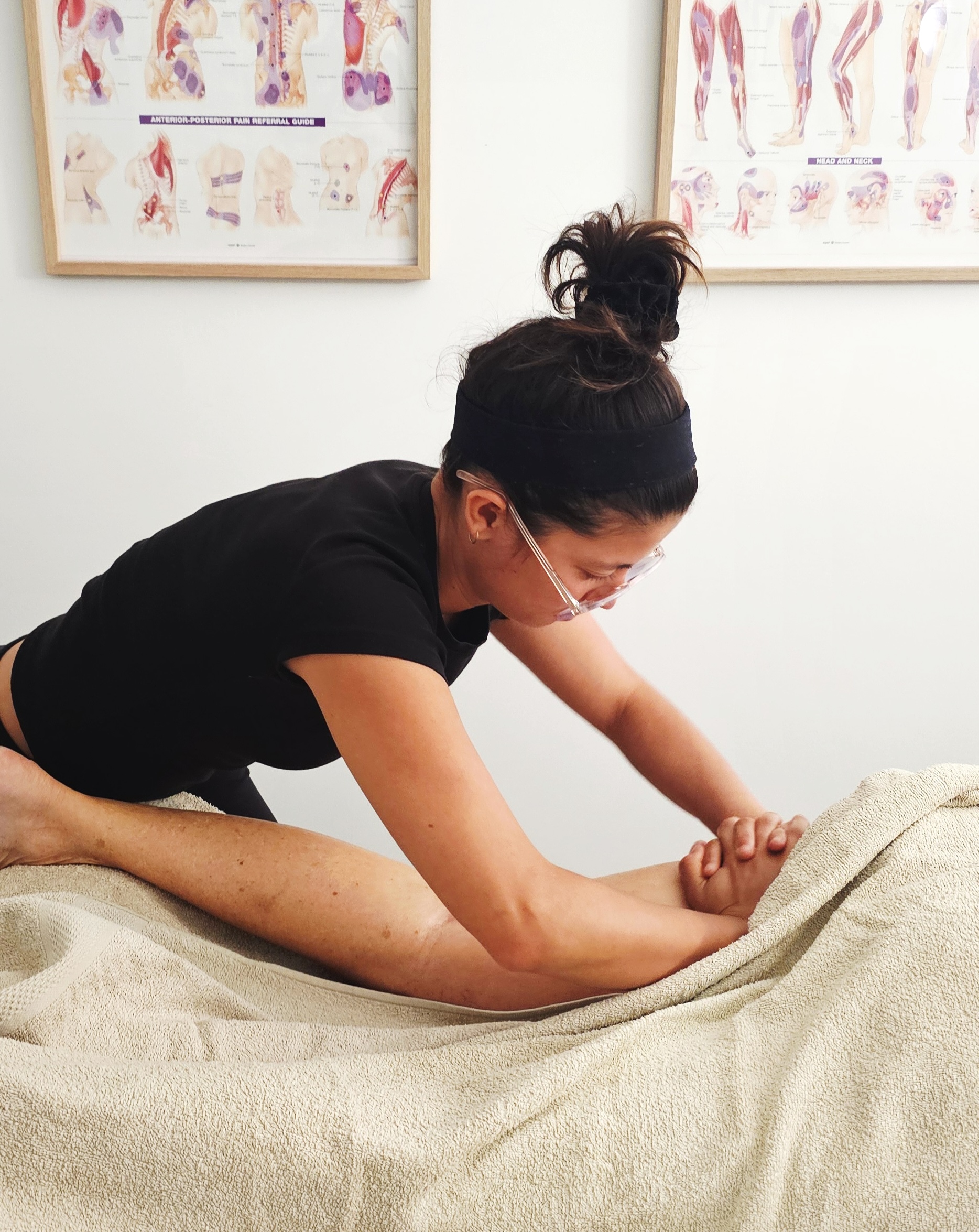
In a remedial massage session, we can look at how your body is moving, identify areas where muscles are holding tension, and work with those areas.
It can be a great way to ease discomfort and help you feel more comfortable getting down on the floor and working on these stability movements.
Feel free to book a treatment at the clinic — I’d love to help you get your body moving comfortably again.
Over the last month, I’ve noticed a common theme coming up in conversations with clients — a lot of us aren’t sleeping particularly well.
Mentally and physically, we can struggle with poor sleep. Add chronic pain, injury, inflammation or stress into the mix and we can create a vicious cycle.
Your body releases a significant amount of growth hormone during deep sleep, which plays an important role in tissue growth and repair. Sleep is also important for recovery, immune function, memory and regulating many of the body’s systems.
I’ve noticed that when sleep improves for some of my clients, so do some of their major symptoms.
So why not take advantage of it?
Here are a few things I’ve experimented with that have helped me improve my own sleep:
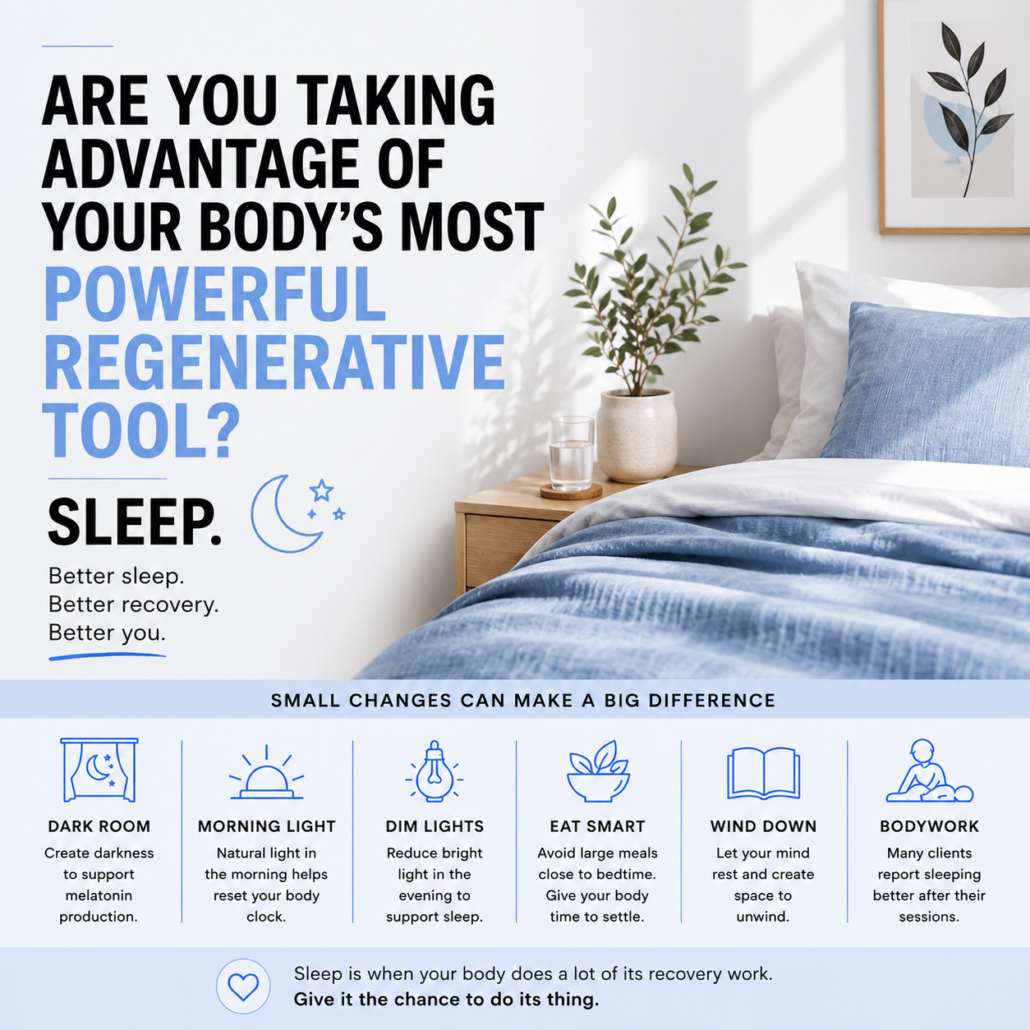
Blackout blinds – Create a dark environment. Melatonin is a hormone produced by the pineal gland and its release is strongly influenced by darkness. I try to block out as much unnecessary light as possible, including lights from devices and TVs.
Morning light – Get outside in the morning. Natural light is one of the strongest signals for your circadian rhythm and can help keep your body clock aligned with the day-night cycle. A morning walk is an easy way to do this.
Dim the lights at night – Have you noticed how many houses are lit up like a hospital at night? Bright light in the evening can interfere with the body’s natural preparation for sleep. I personally like using warm, dim or red lighting in the evening. You don’t necessarily need red lights — the important part is reducing bright light as you get closer to bed.
Food – I try to avoid having a big meal right before bed. Everyone is different, but eating heavily late at night can make it harder to sleep, particularly if you experience digestive discomfort or reflux.
Let the mind rest – This one is probably the hardest. No phones, work or stressful activities right before bed if you can help it. Instead, try reading, relaxing, meditating, journaling, spending time with a loved one or simply winding down for the day.
What about supplements?
This is where I’ll add a disclaimer: I’m not a doctor or dietitian, and I’m not recommending supplements. I’m simply sharing my own experience and things clients have told me they’ve experienced.
Magnesium – I’ve experimented with magnesium myself and, interestingly, I found it stimulating rather than calming. Some people report the opposite.
Glycine – I’ve also experimented with glycine and personally found it helped me fall asleep faster and improved my sleep quality.
If you’re considering supplements, especially if you’re taking medication or have an existing health condition, speak with your doctor.
Sauna – I’ve also found a sauna in the evening interesting for winding down. There is some evidence that passive heating before bed may help with sleep, although the research is still developing.
And finally… bodywork.
Most of my clients report that they sleep much better after their sessions 😉
I can’t say that bodywork causes better sleep, but I find it interesting how often people tell me they feel more relaxed and sleep better after treatment.
Maybe we’re all just looking for the same thing:
Give the body the opportunity to recover, and see what happens.
The jaw is one of the most common areas I treat in clinic.
If you’ve ever noticed clicking, locking, or pain when you chew, speak, or yawn—you’re not alone. It’s incredibly common, and for many people, it gradually becomes part of everyday life.
Pain or dysfunction in the jaw falls under an umbrella term, Temporomandibular Dysfunction (TMD).
It doesn’t just affect the joint itself—it can involve the surrounding muscles, fascia, and even nerves, making basic movements uncomfortable or restricted.
So what’s the cause?
There’s rarely just one cause. TMD can be influenced by:
Stress and tension
Teeth grinding (bruxism)
Hormonal factors
Injury or joint displacement
Habitual patterns (even how you chew)
Postural patterns
What can Structural Integration do?
In a session, I assess both:
Local structures (neck, jaw and surrounding muscles)
Global influences (posture, structures above and below)
Treatment may include:
External work on the jaw muscles
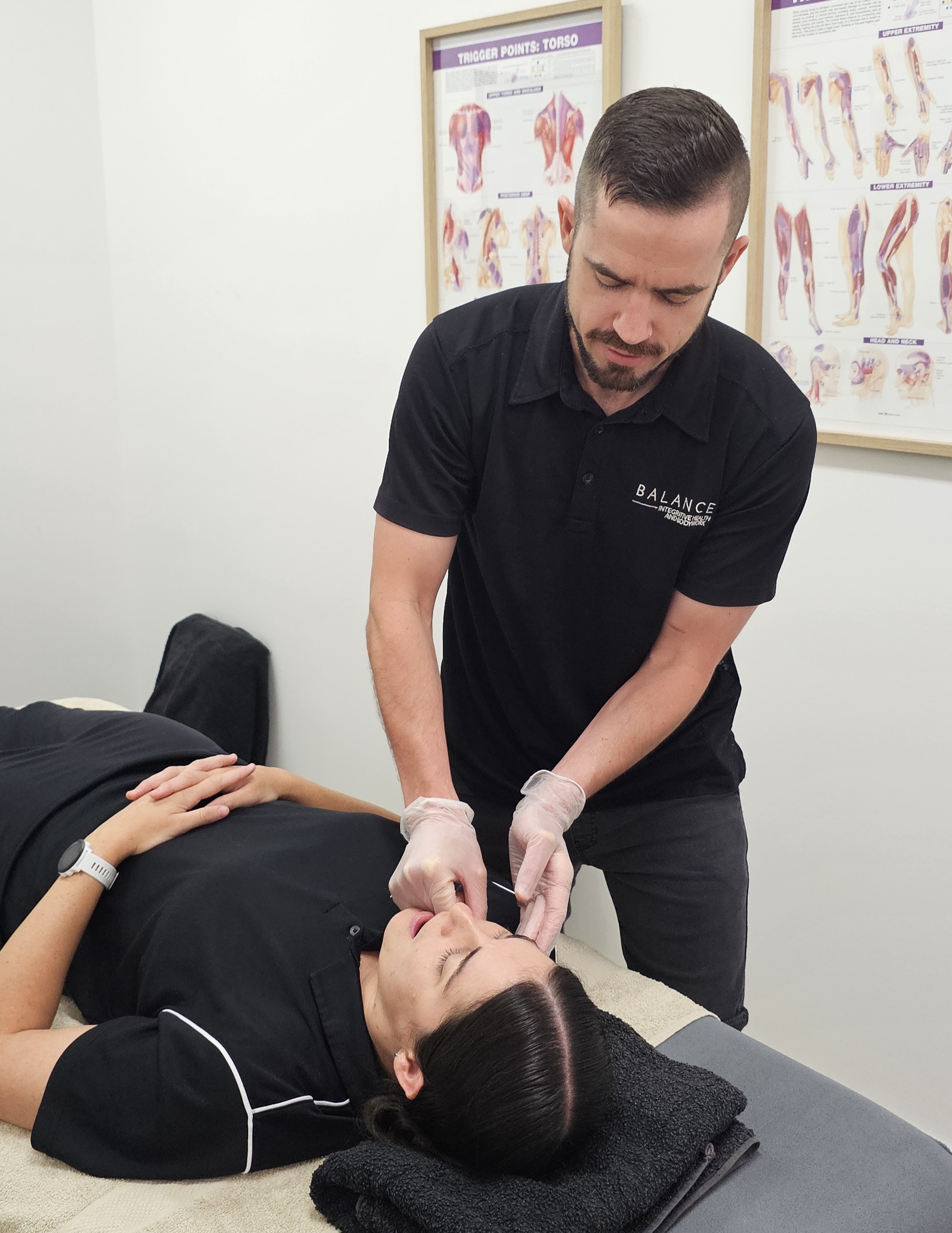
Intraoral (inside the mouth) techniques
Integration with the rest of the body
When I assess the jaw, I’m not just asking:
Is it painful?
I’m looking at:
How is it sitting?
Does it move freely through its full range?
Is the tension local (jaw muscles) or coming from elsewhere?
Case Study
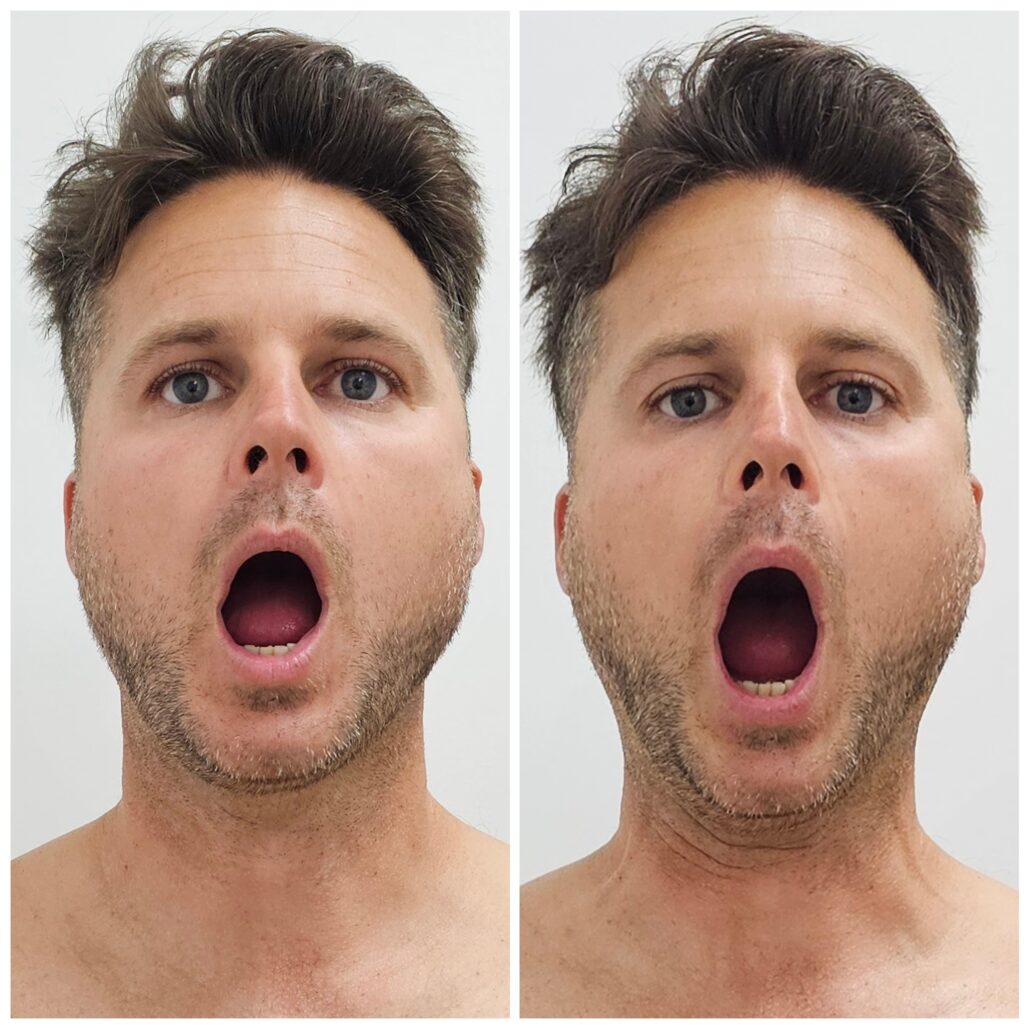
A recent client came in with pain in the right side of his jaw and frequent locking.
Before: the jaw was shifting to the right with limited opening
After: the jaw is tracking more neutral relative to his anatomy and his range improved significantly
I focused this session on the local structures (the major muscles of mastication) and It involved both external work and intra oral work.
I prescribed self-massage to help the client maintain the changes outside of clinic.
The Bigger Picture
What many people don’t realise is that the jaw doesn’t just work in isolation.
Jaw position and function can also be influenced by the entire body—especially the spine, pelvis and even the feet!
For some, you may be able feel this for yourself:
Stand up and gently tilt your pelvis backwards (posterior tilt).
Now notice your jaw.
Do you notice a change in tension?
Relax that position.
if you can let the arches in your feet flatten
Now notice your jaw.
Do you notice a change in tension?
These small changes highlight something important:
Your jaw is responding to what the rest of your body is doing.
A Different Way to Look at It
In structural Integration, we look at the body as a connected system rather than isolated parts.
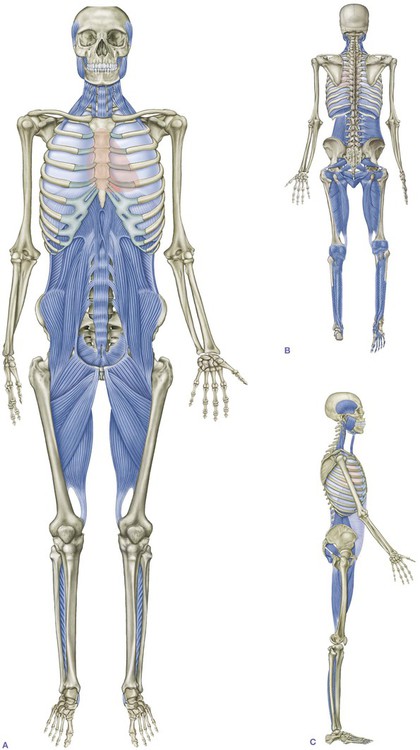
Concepts like Anatomy Trains (described by Thomas Myers) map how muscles and fascia form continuous lines through the body—linking distant areas together.
This helps explain why tension or imbalance in one area can show up somewhere else entirely.
The Anatomy Trains – the deep front line.
Why This Matters
If TMD is only treated at the jaw, relief can sometimes be short-lived.
But when we consider the broader patterns—how the body is organising itself as a whole—it often leads to more lasting change.
This is where structural integration can really help in more chronic or long-term issues.
A Quick Insight Into Your Jaw Muscles
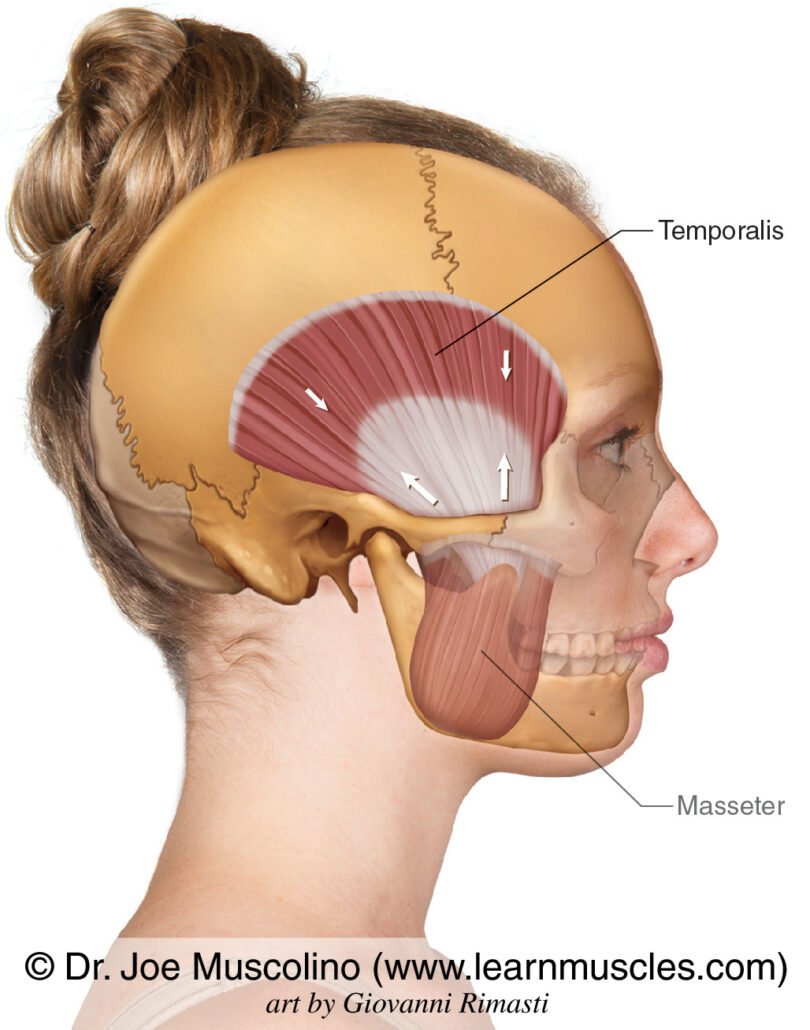
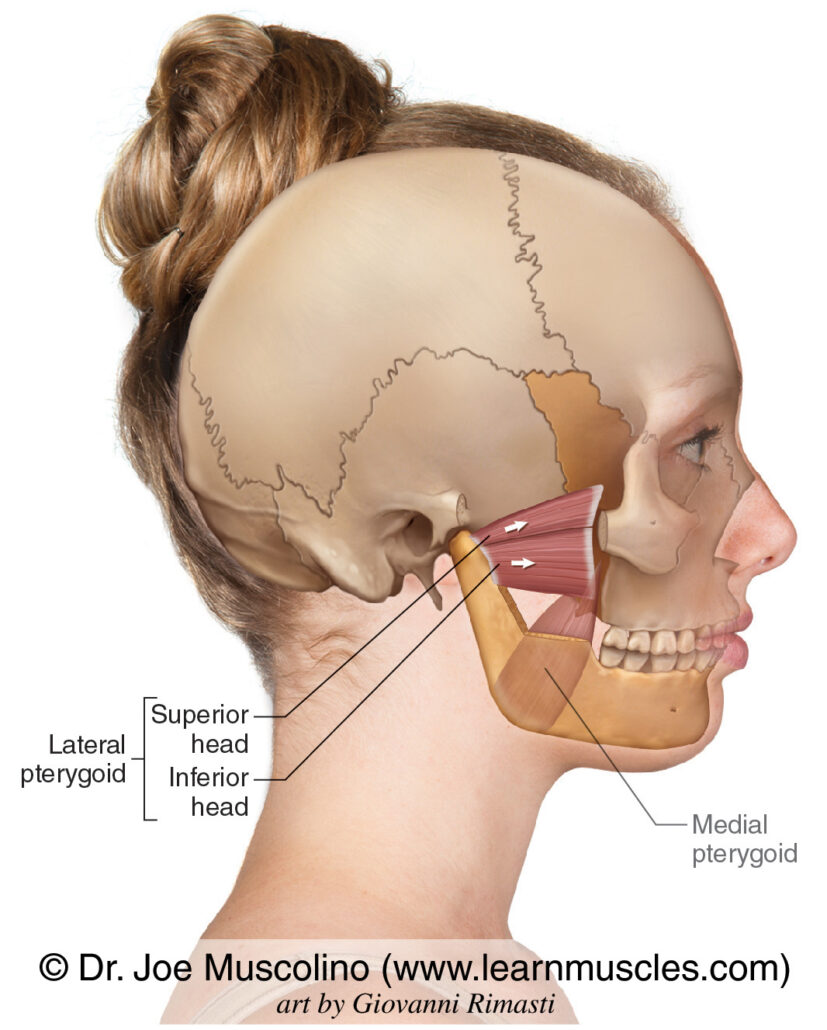
You’ve probably already felt some of these without realising it, these are your major muscles of mastication (chewing):
Masseter – your main chewing muscle. If you clench your teeth, you’ll feel it bulge just under your cheek bone.
Temporalis – sits on the side of your head and is often involved in tension headaches (it’s the one people instinctively rub).
Pterygoids – smaller, deeper muscles that help guide how your jaw moves and tracks.
What About the Smaller Muscles?
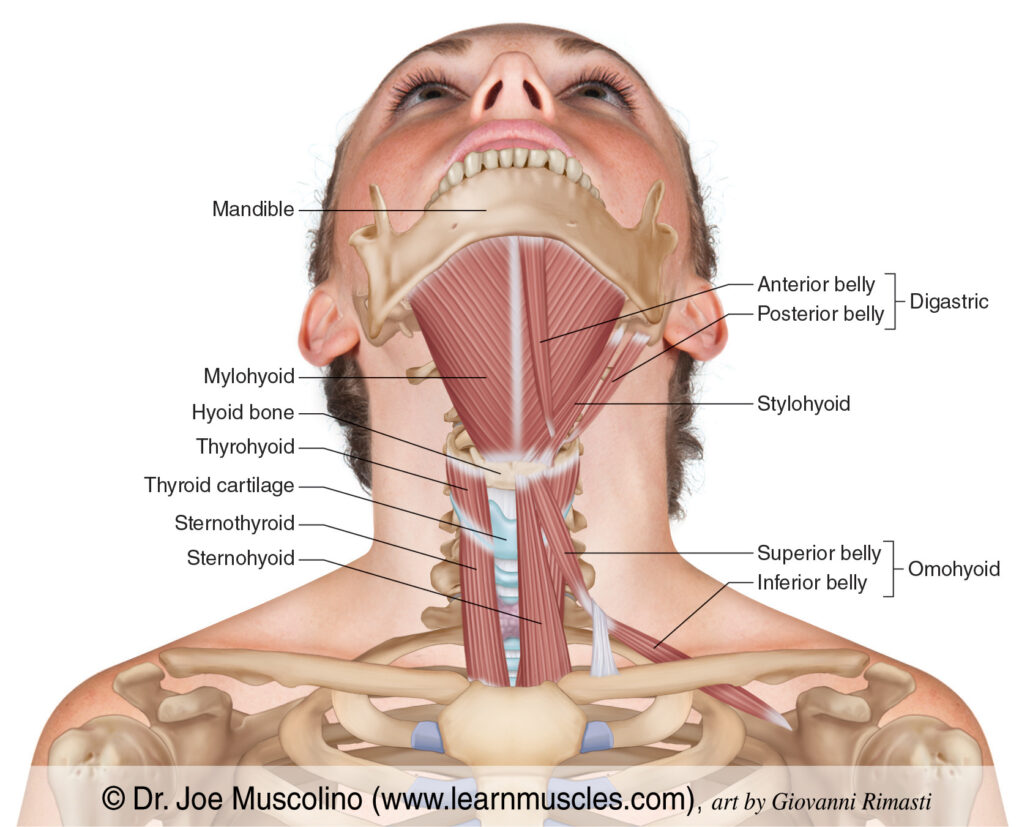
Beyond these, there’s another group worth knowing about—the hyoid muscles.
These are a set of smaller, more delicate muscles located in the neck that support the jaw, throat, and tongue. While they’re not as well known, they are also involved in mastication and play an important role in tongue position and how the jaw moves and feels.
A Simple Place to Start
For general relief, you can use self-massage on two of the main jaw muscles: the masseter and temporalis.
This can help reduce jaw tension and may also ease tension headaches.
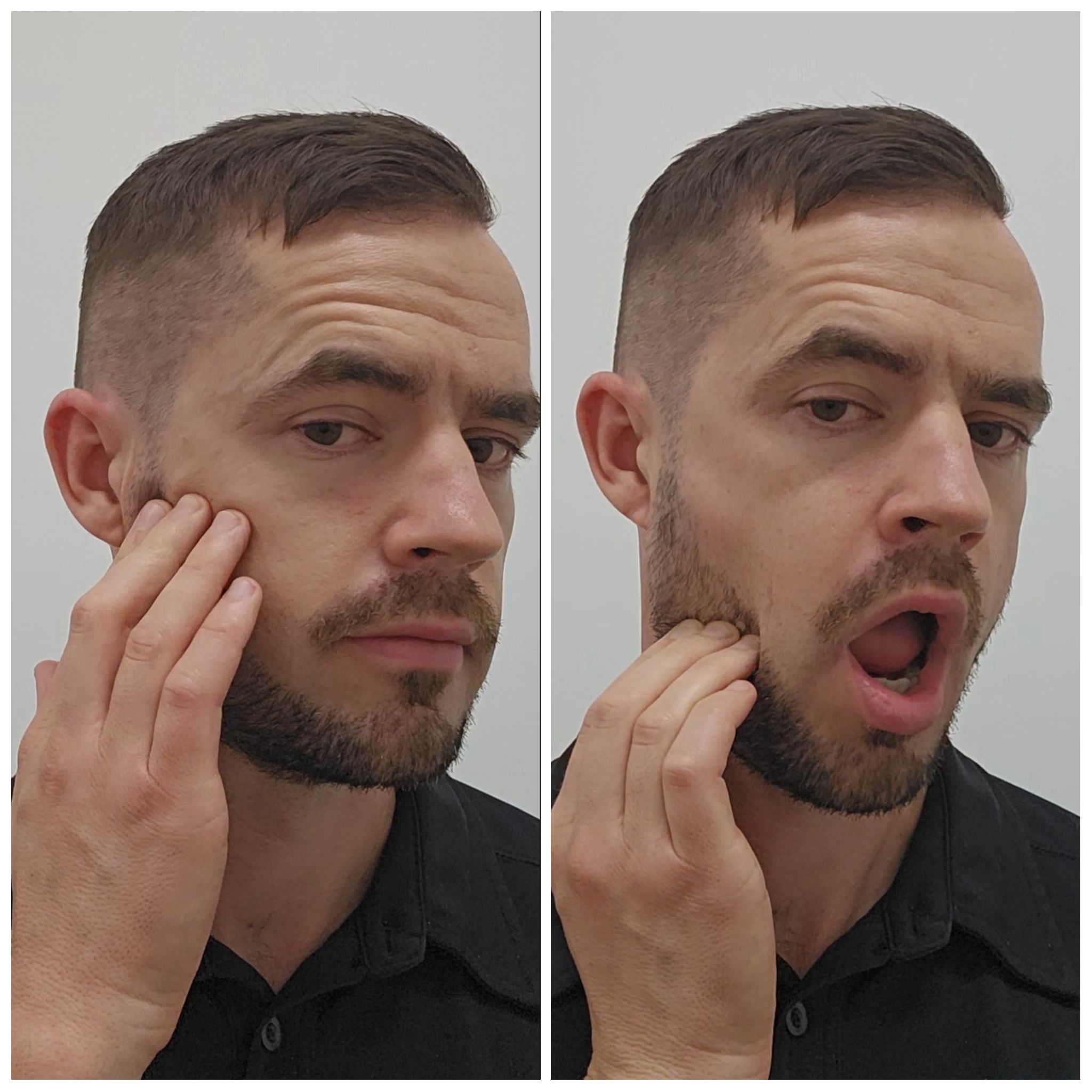
Masseter
Find your cheekbone on the side you’re working
Place your fingers just underneath it
Gently clench your jaw and feel the muscle push into your fingers.
Relax your jaw.
Now, keeping light pressure, slowly draw the tissue downward as you open your mouth.
Work along the full length of the muscle—from your cheekbone down to the angle of your jaw—or spend more time where it feels most tender.
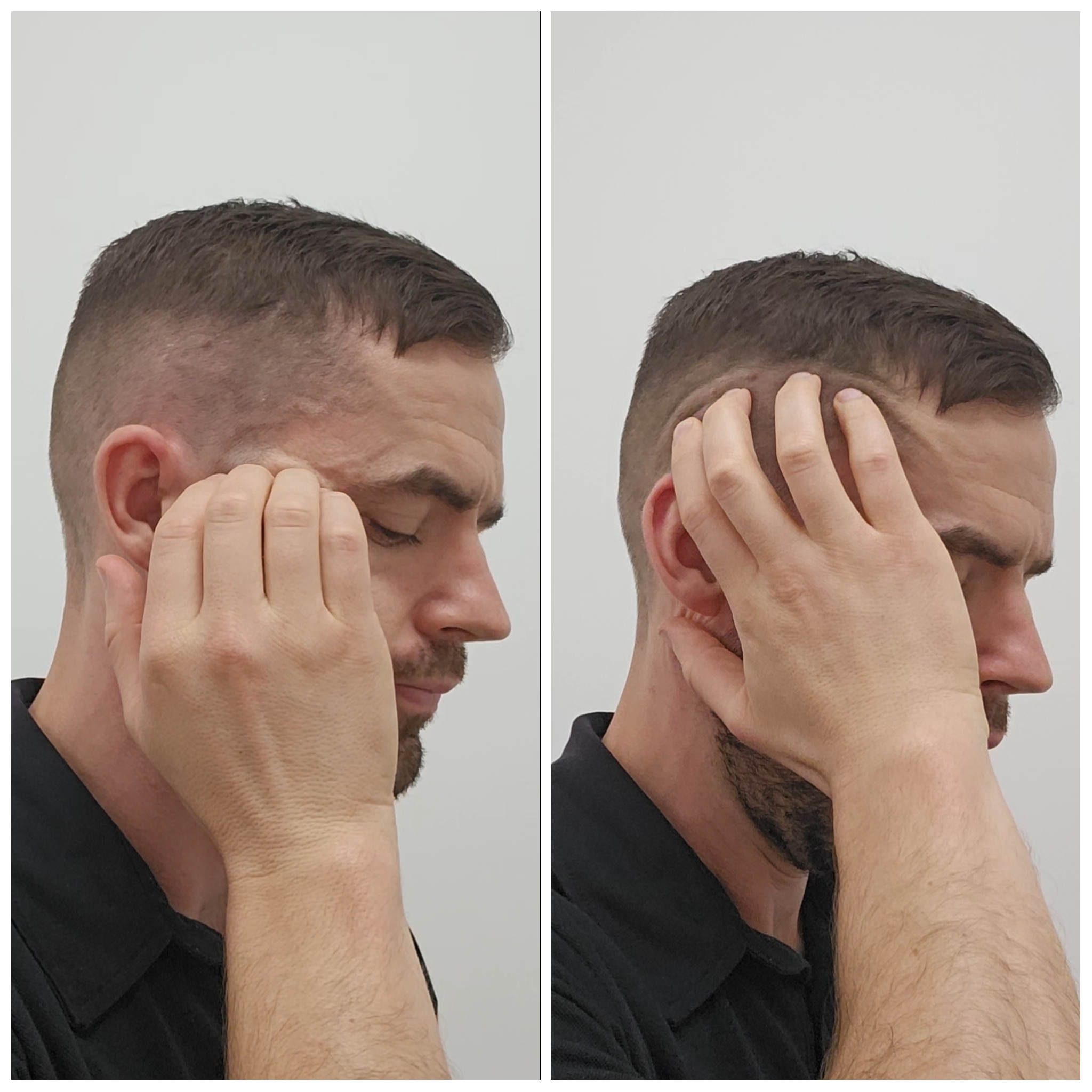
Temporalis
Start at your cheekbone
Walk your fingers up onto the side of your head
Gently clench your jaw to feel the muscle activate under your fingers.
Relax.
Place your fingers just above the cheekbone, then slowly curl into the tissue and follow it upward as you open your mouth.
As you move through the muscle, your hands will naturally travel toward the sides of your head.
You can work one side at a time or both together.
A Quick Note
Keep the pressure comfortable and easy—this shouldn’t feel aggressive or forced.
Bringing It All Together
Temporomandibular Dysfunction (TMD) is often treated as a local issue—but it’s not always the case.
The body is a connected system and the jaw is influenced by how the system (whole body) organises itself—through posture, movement, and patterns of tension.
That’s why symptoms like clicking, locking, or pain can persist, even when you’ve tried to address the area directly.
There are, of course, other factors—like hormones and stress—that can also influence how the jaw feels and functions.
In many cases, working with a team of practitioners can help support a more complete approach to recovery.
Structural Integration integrates (couldn’t resist) well with this approach to treatment—working not just with the jaw, but with the global relationships that influence how it functions.
This approach can be helpful for both acute and long-standing issues, particularly for those looking for a more comprehensive or multidisciplinary path.
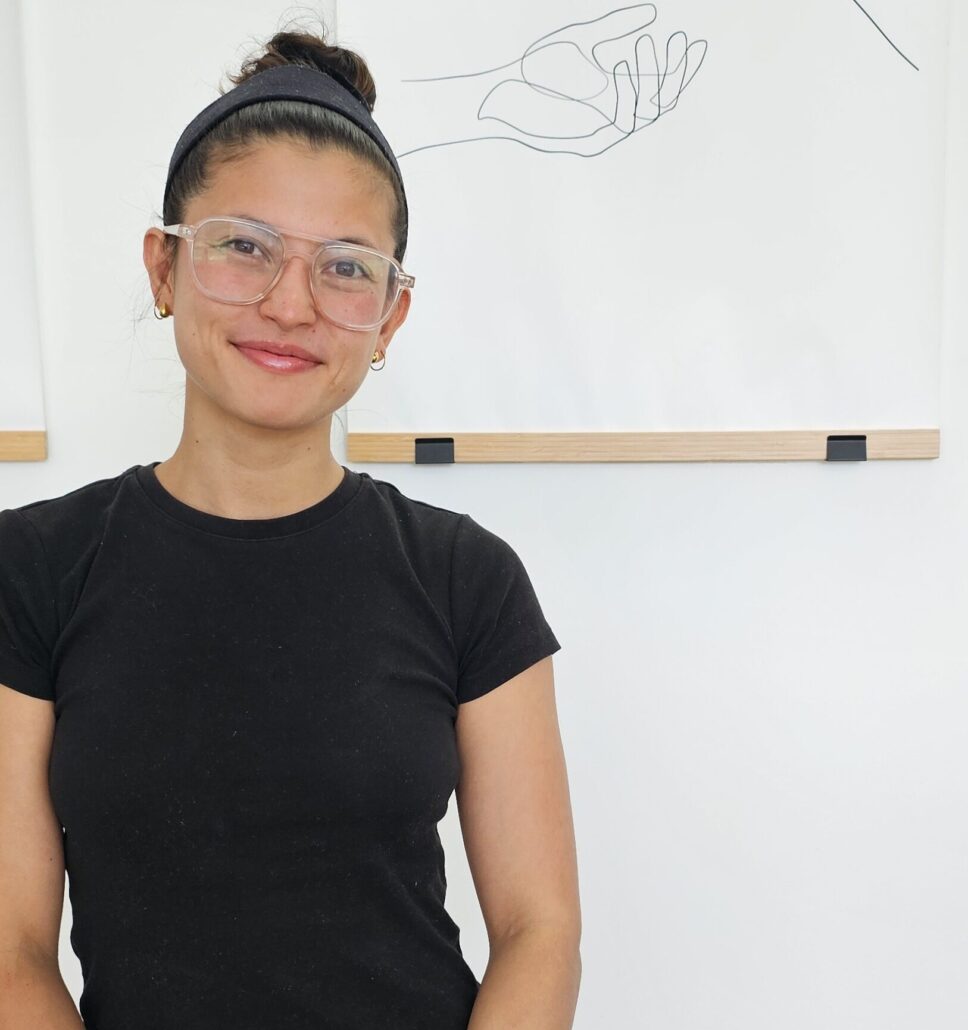
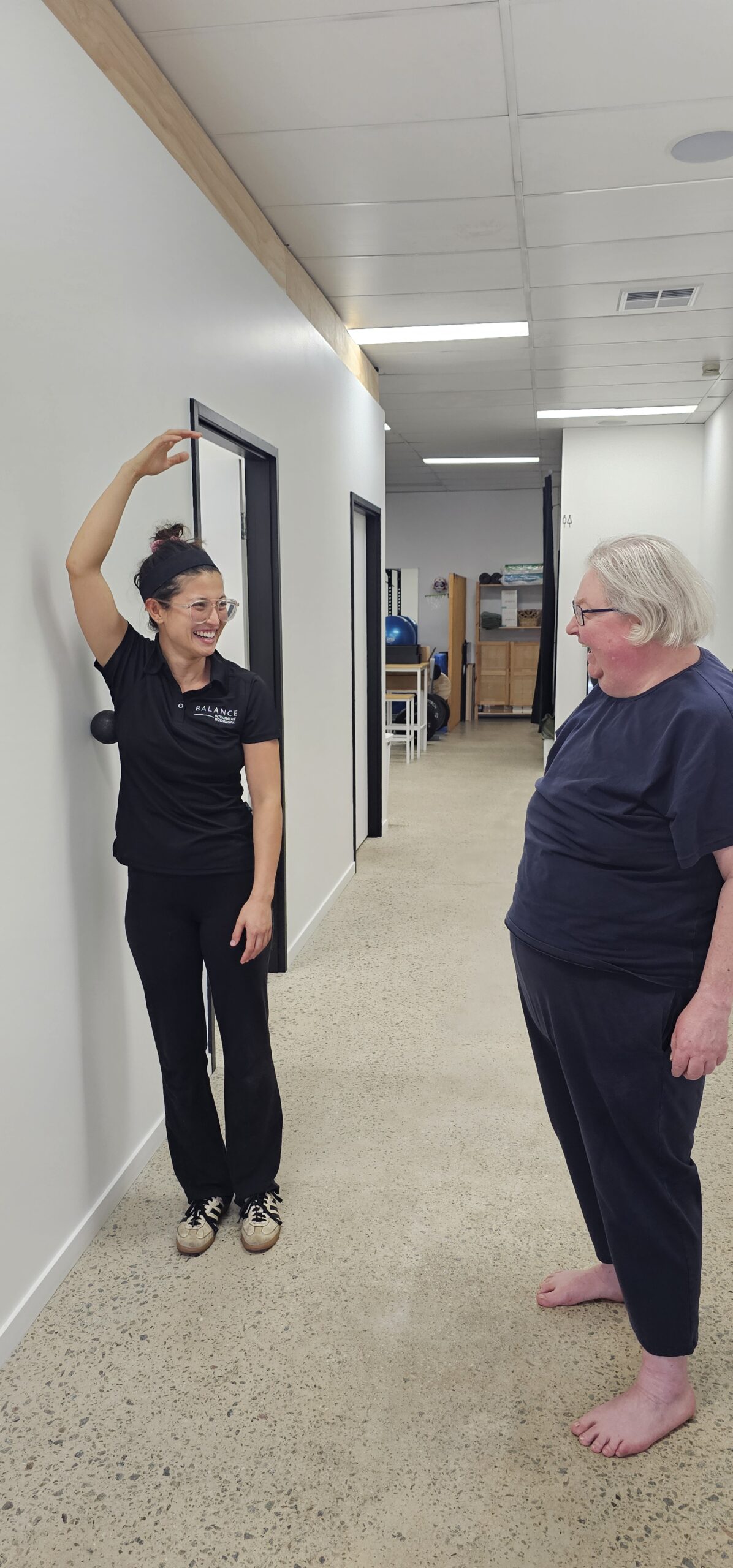
Hello! You may have heard that Balance Integrative Bodywork has recently welcomed a new team member—that’s me.
Picture this: it’s 1998. I’m four years old and 102 cm tall. I’ve lined up an eclectic collection of teddy bears to form a “clinic” hallway in the lounge room, with pillows and blankets at the end.
I ask my mum to walk through. “How can I help you today, miss?”
That was my first massage clinic.
I’ve always been a healer at heart. My great-grandmother, from Singapore, was a hands-on healer, and my mum has always said I inherited her touch.
A Life in Motion
Over the years, I’ve explored a wide range of physical practices—from breakdancing and Muay Thai to yoga and bouldering.
These days, I’m especially interested in movement complexity and coordination—building a body that feels as fluid as it is strong.
This curiosity shapes every treatment I give. It’s also what led me toward somatic work and the Feldenkrais Method, which focuses on making the “impossible possible” by uncovering more efficient and easeful patterns of movement.
Why I Focus on Longevity & Seniors
In modern life, it’s easy to become disconnected from the body—to get “stuck in our heads” and lose our ability to sense how we move.
I believe that developing true body awareness—feeling how your body moves and responds—is a key part of long-term health and independence.
I use remedial massage to help bridge that gap. By working with both the muscles and the nervous system, we can “wake up” areas that feel dull or disconnected, restoring a sense of coordination and control.
This is why I’m particularly passionate about working with seniors and those focused on long-term mobility.
Before becoming a remedial therapist, I spent six years working in aged care. I genuinely value the wisdom, resilience, and connection found in that work.
One thing I’ve consistently seen is that stiffness is often accepted as inevitable with age—but in many cases, there is far more potential for ease and mobility than people expect. Sometimes, the body just needs the right input to “remember” how to move again.
I’ve found that the body remains incredibly responsive to skilled, intentional touch at any stage of life.
Whether your goal is to maintain your golf swing, keep up with your grandkids, or simply move through daily life with greater comfort, my aim is to help you rediscover ease and confidence in your body.
I’m looking forward to meeting you in the clinic and supporting you in staying in motion.