
The jaw is one of the most common areas I treat in clinic.
If you’ve ever noticed clicking, locking, or pain when you chew, speak, or yawn—you’re not alone. It’s incredibly common, and for many people, it gradually becomes part of everyday life.
Pain or dysfunction in the jaw falls under an umbrella term, Temporomandibular Dysfunction (TMD).
It doesn’t just affect the joint itself—it can involve the surrounding muscles, fascia, and even nerves, making basic movements uncomfortable or restricted.
So what’s the cause?
There’s rarely just one cause. TMD can be influenced by:
- Stress and tension
- Teeth grinding (bruxism)
- Hormonal factors
- Injury or joint displacement
- Habitual patterns (even how you chew)
- Postural patterns
What can Structural Integration do?
In a session, I assess both:
- Local structures (neck, jaw and surrounding muscles)
- Global influences (posture, structures above and below)
Treatment may include:
- External work on the jaw muscles
- Intraoral (inside the mouth) techniques
- Integration with the rest of the body
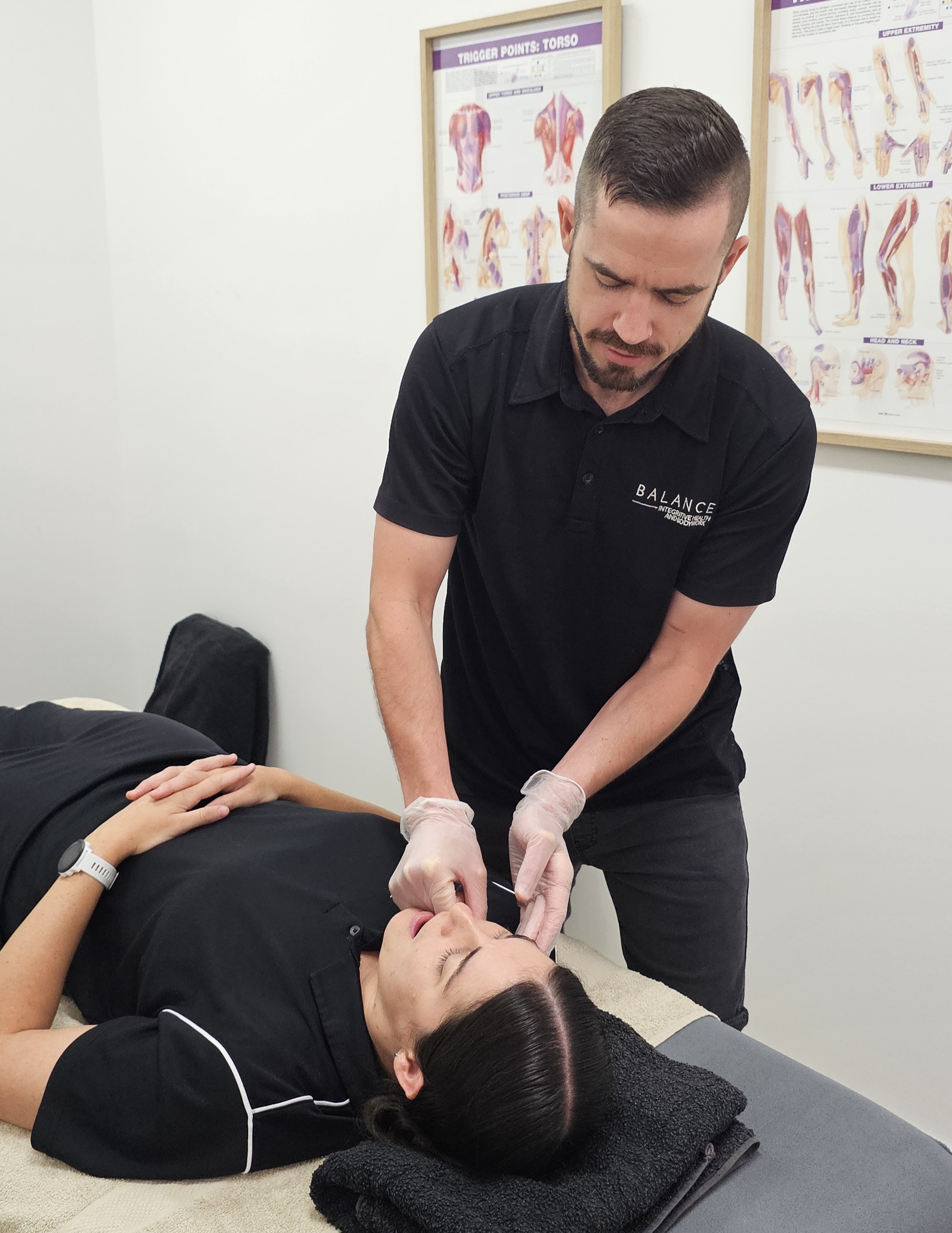
When I assess the jaw, I’m not just asking:
- Is it painful?
I’m looking at:
- How is it sitting?
- Does it move freely through its full range?
- Is the tension local (jaw muscles) or coming from elsewhere?
Case Study
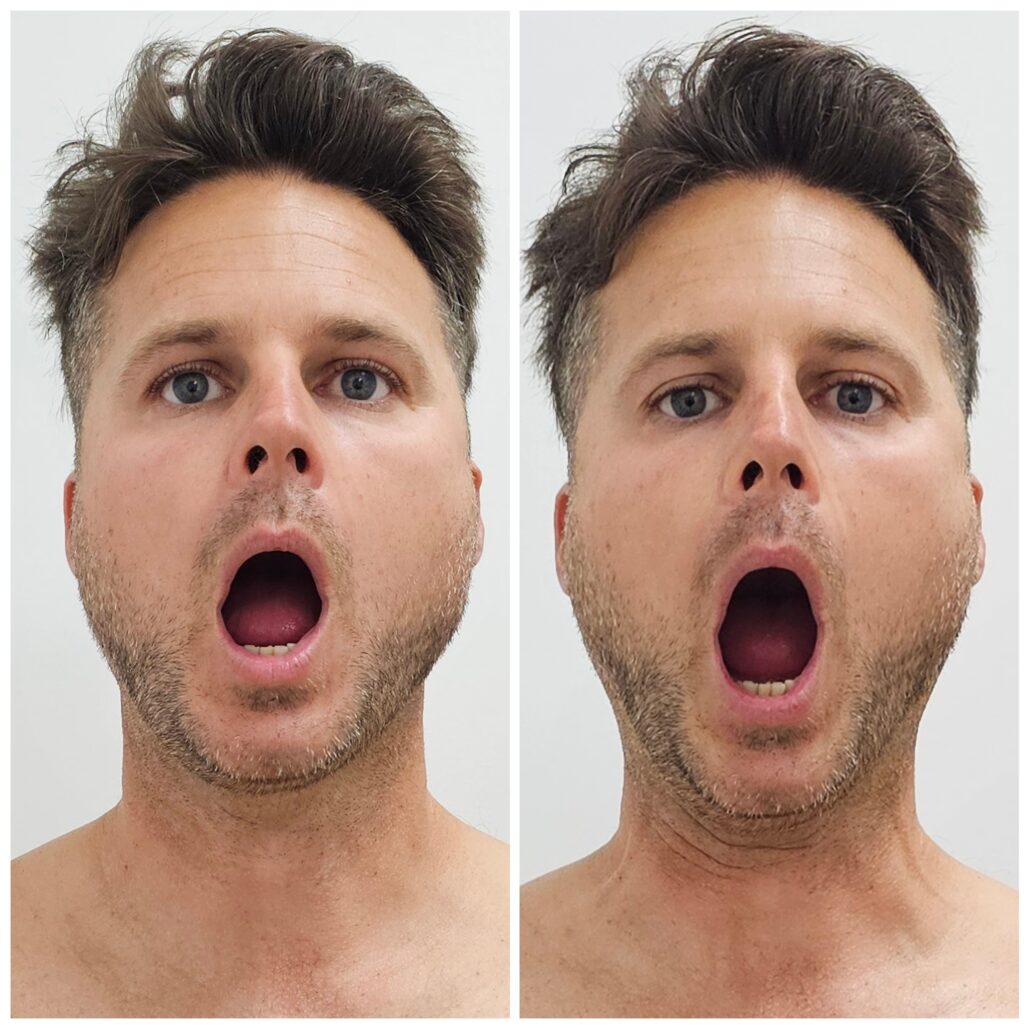
A recent client came in with pain in the right side of his jaw and frequent locking.
- Before: the jaw was shifting to the right with limited opening
- After: the jaw is tracking more neutral relative to his anatomy and his range improved significantly
I focused this session on the local structures (the major muscles of mastication) and It involved both external work and intra oral work.
I prescribed self-massage to help the client maintain the changes outside of clinic.
The Bigger Picture
What many people don’t realise is that the jaw doesn’t just work in isolation.
Jaw position and function can also be influenced by the entire body—especially the spine, pelvis and even the feet!
For some, you may be able feel this for yourself:
- Stand up and gently tilt your pelvis backwards (posterior tilt).
- Now notice your jaw.
- Do you notice a change in tension?
- Relax that position.
- if you can let the arches in your feet flatten
- Now notice your jaw.
- Do you notice a change in tension?
These small changes highlight something important:
Your jaw is responding to what the rest of your body is doing.
A Different Way to Look at It
In structural Integration, we look at the body as a connected system rather than isolated parts.
Concepts like Anatomy Trains (described by Thomas Myers) map how muscles and fascia form continuous lines through the body—linking distant areas together.
This helps explain why tension or imbalance in one area can show up somewhere else entirely.
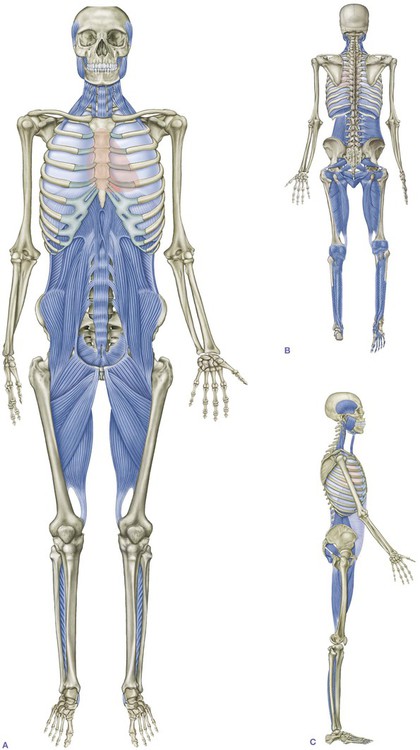
The Anatomy Trains – the deep front line.
Why This Matters
If TMD is only treated at the jaw, relief can sometimes be short-lived.
But when we consider the broader patterns—how the body is organising itself as a whole—it often leads to more lasting change.
This is where structural integration can really help in more chronic or long-term issues.
A Quick Insight Into Your Jaw Muscles
You’ve probably already felt some of these without realising it, these are your major muscles of mastication (chewing):
- Masseter – your main chewing muscle. If you clench your teeth, you’ll feel it bulge just under your cheek bone.
- Temporalis – sits on the side of your head and is often involved in tension headaches (it’s the one people instinctively rub).
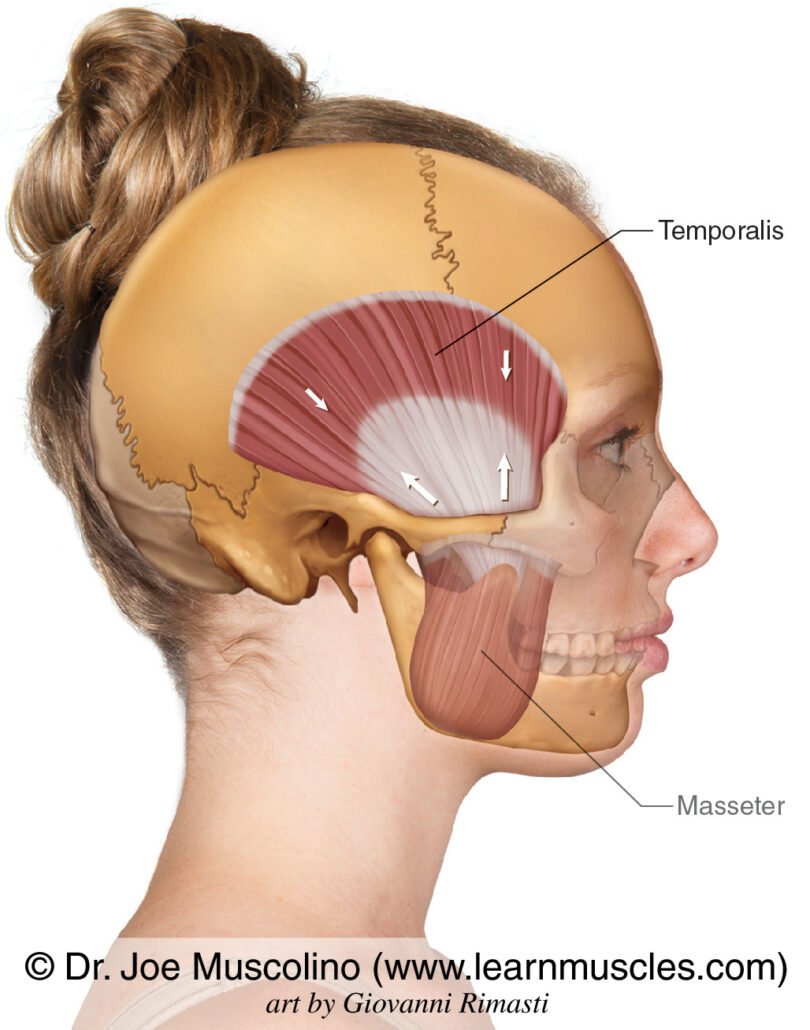
- Pterygoids – smaller, deeper muscles that help guide how your jaw moves and tracks.
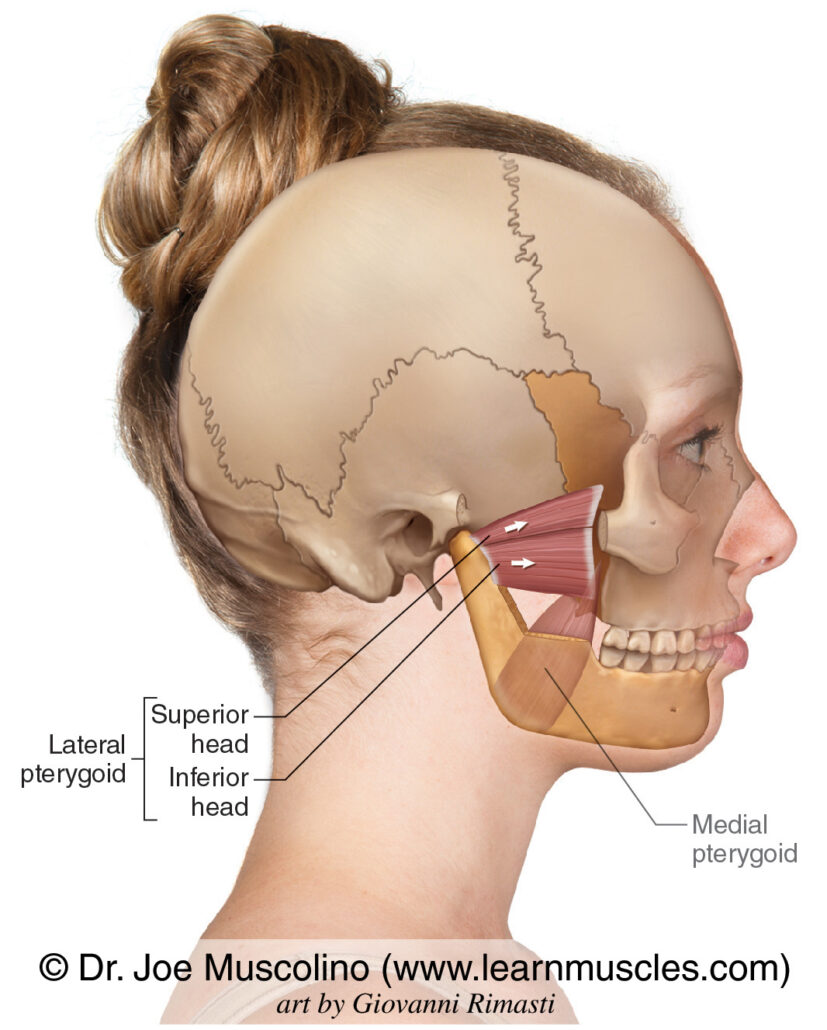
What About the Smaller Muscles?
Beyond these, there’s another group worth knowing about—the hyoid muscles.
These are a set of smaller, more delicate muscles located in the neck that support the jaw, throat, and tongue. While they’re not as well known, they are also involved in mastication and play an important role in tongue position and how the jaw moves and feels.
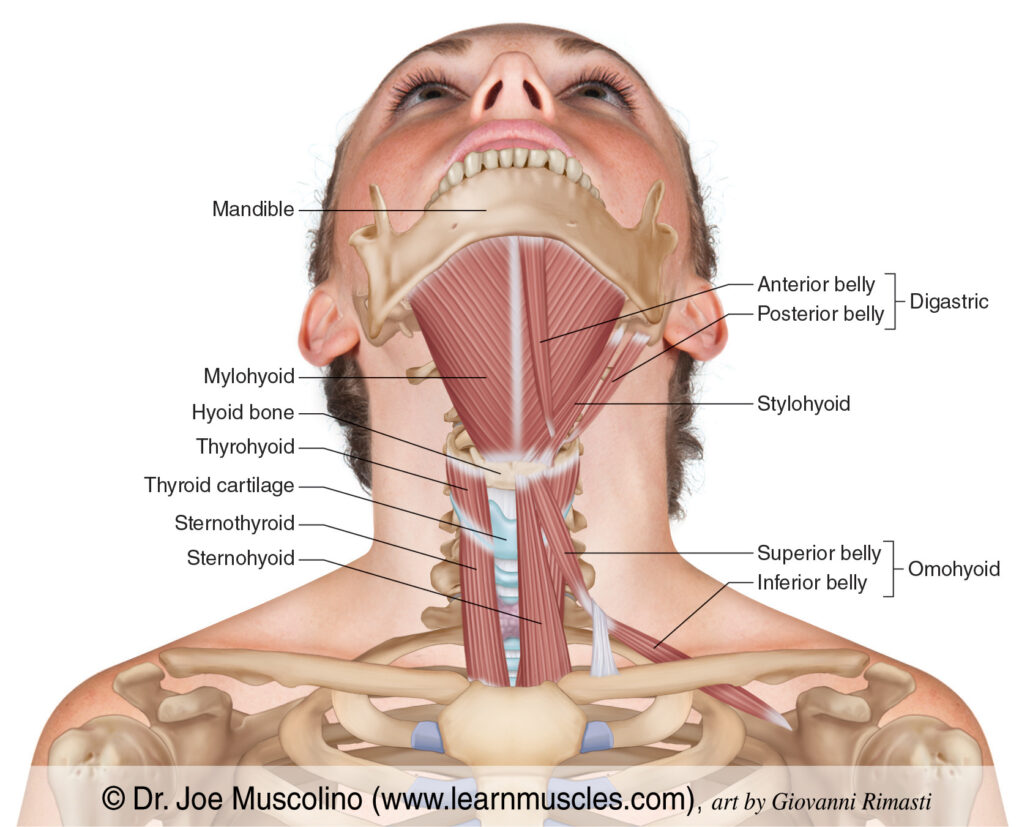
A Simple Place to Start
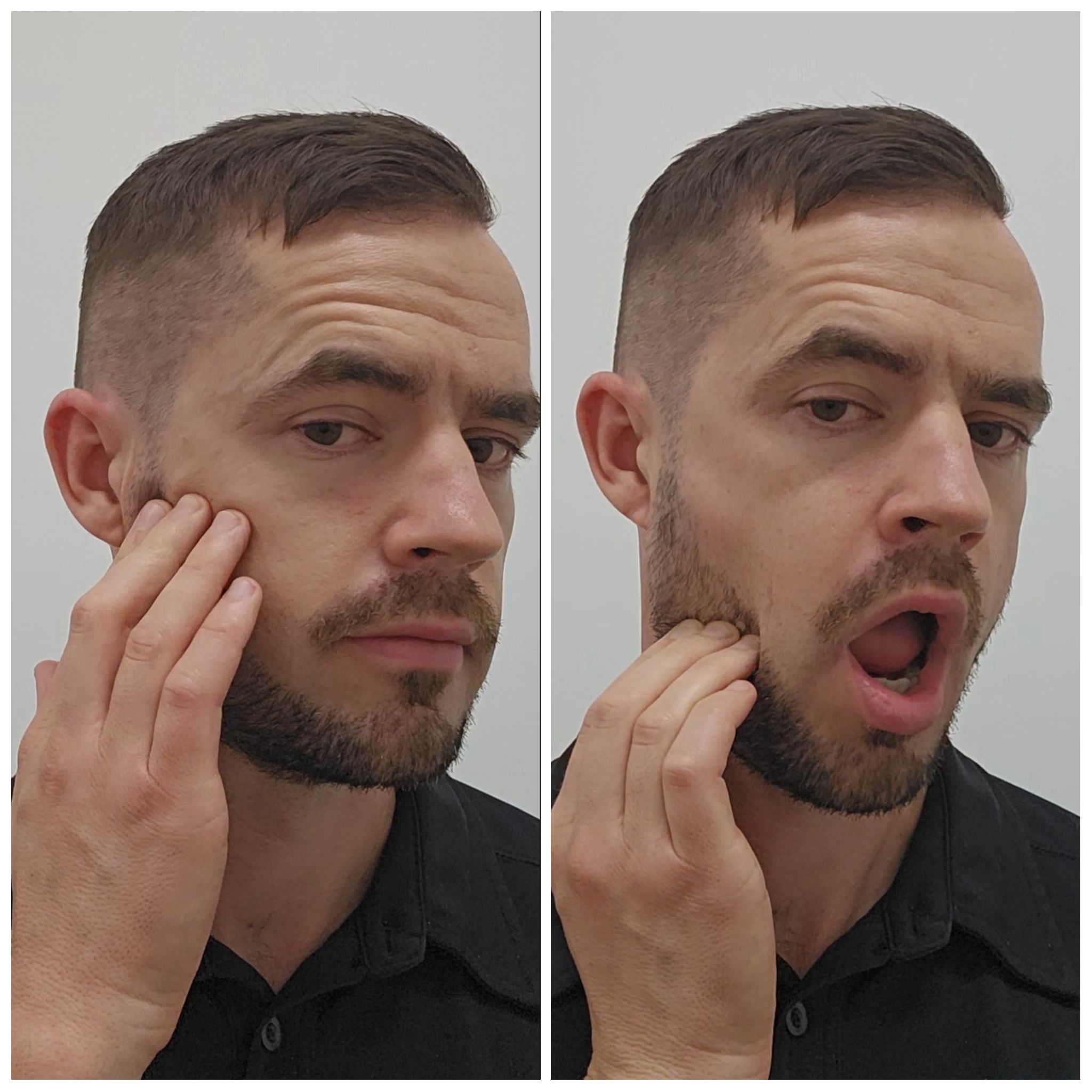
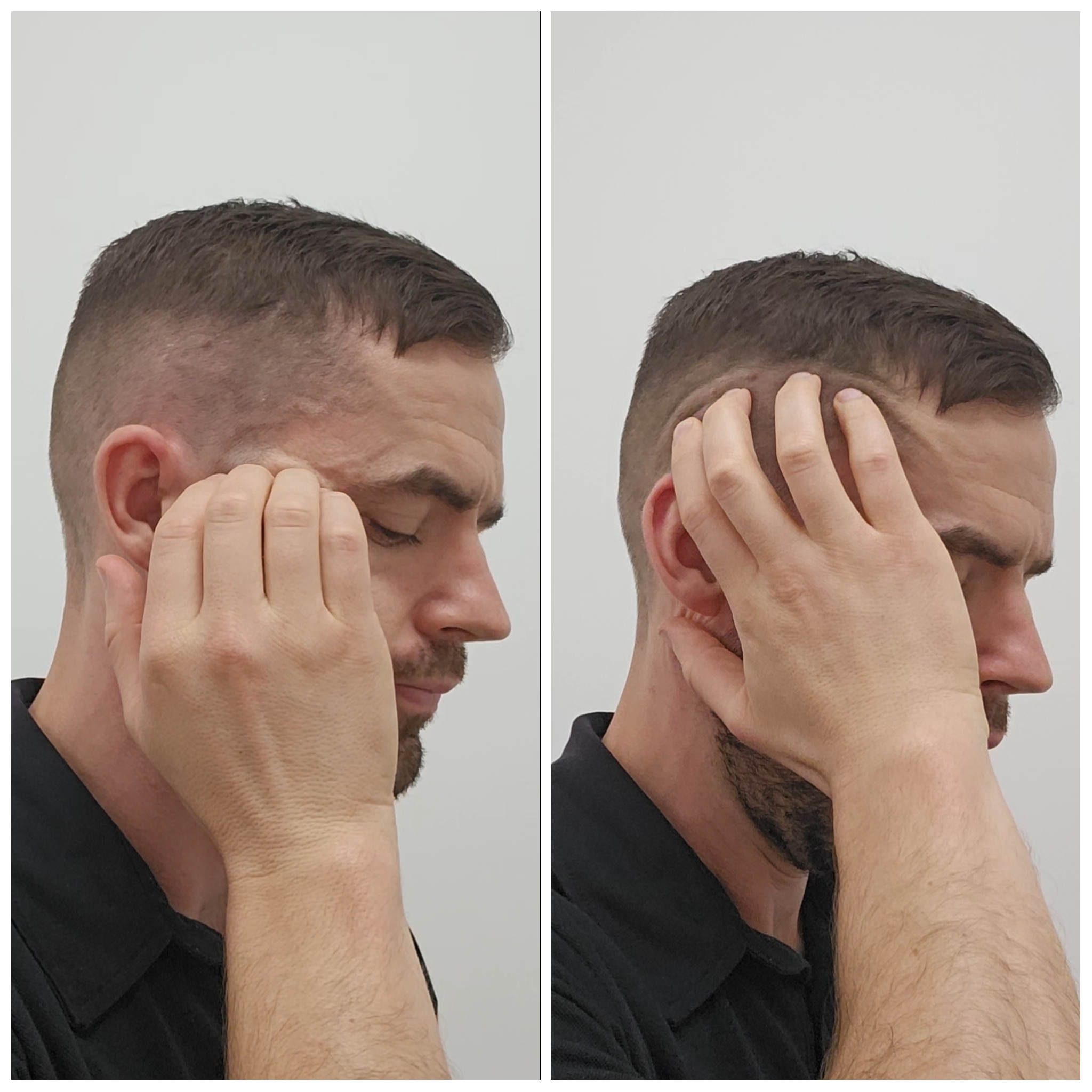
For general relief, you can use self-massage on two of the main jaw muscles: the masseter and temporalis.
This can help reduce jaw tension and may also ease tension headaches.
Masseter
- Find your cheekbone on the side you’re working
- Place your fingers just underneath it
- Gently clench your jaw and feel the muscle push into your fingers.
- Relax your jaw.
- Now, keeping light pressure, slowly draw the tissue downward as you open your mouth.
- Work along the full length of the muscle—from your cheekbone down to the angle of your jaw—or spend more time where it feels most tender.
Temporalis
- Start at your cheekbone
- Walk your fingers up onto the side of your head
- Gently clench your jaw to feel the muscle activate under your fingers.
- Relax.
- Place your fingers just above the cheekbone, then slowly curl into the tissue and follow it upward as you open your mouth.
- As you move through the muscle, your hands will naturally travel toward the sides of your head.
- You can work one side at a time or both together.
A Quick Note
Keep the pressure comfortable and easy—this shouldn’t feel aggressive or forced.
Bringing It All Together
Temporomandibular Dysfunction (TMD) is often treated as a local issue—but it’s not always the case.
The body is a connected system and the jaw is influenced by how the system (whole body) organises itself—through posture, movement, and patterns of tension.
That’s why symptoms like clicking, locking, or pain can persist, even when you’ve tried to address the area directly.
There are, of course, other factors—like hormones and stress—that can also influence how the jaw feels and functions.
In many cases, working with a team of practitioners can help support a more complete approach to recovery.
Structural Integration integrates (couldn’t resist) well with this approach to treatment—working not just with the jaw, but with the global relationships that influence how it functions.
This approach can be helpful for both acute and long-standing issues, particularly for those looking for a more comprehensive or multidisciplinary path.
Thanks for reading,
-Lewis