I see lower back pain almost every day in the clinic.
In fact, around 1 in 6 Australians were reported to have chronic back problems in 2014–15. I’ve been one of them, so I know that cycle of guarding and worrying.
There’s a great Aussie pain scientist named Lorimer Moseley who talks about how pain can be the body’s protective response.
When my back was at its worst, the mental weight of it made the physical tightness feel so much sharper.
But we can actually work on building confidence in movement. We can do a lot before giving up, and for me, it starts with building confidence in my stability.
Why the Bird Dog?
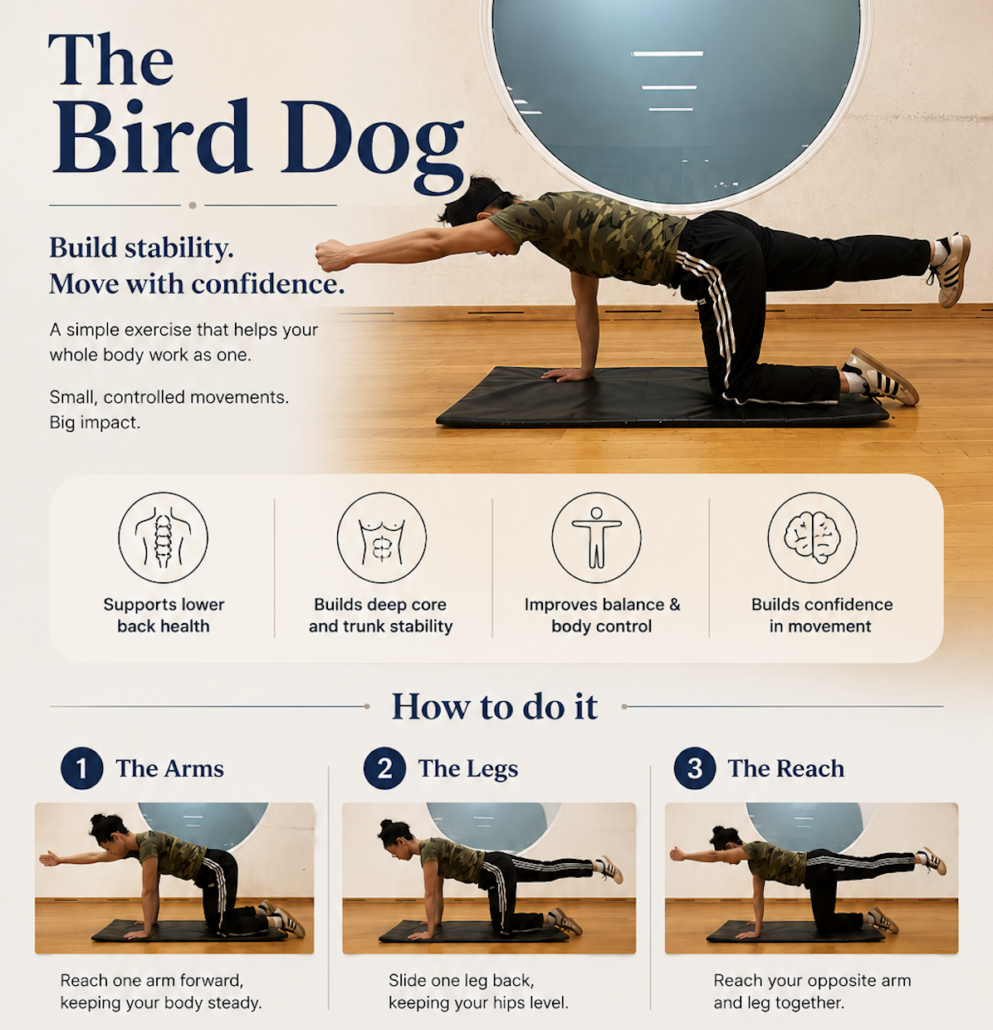
It’s not about getting a six-pack, but it is a great way to challenge your core and trunk stability. Instead of crunching, your muscles are working quietly to keep you stable while your arms and legs move.
The Bird Dog teaches the body to coordinate the upper and lower body through a diagonal pattern. When you reach your opposite arm and leg, your trunk has to work to keep your pelvis and spine controlled.
For me, that’s the interesting part: your limbs are moving while your middle stays relatively quiet.
How to set it up:
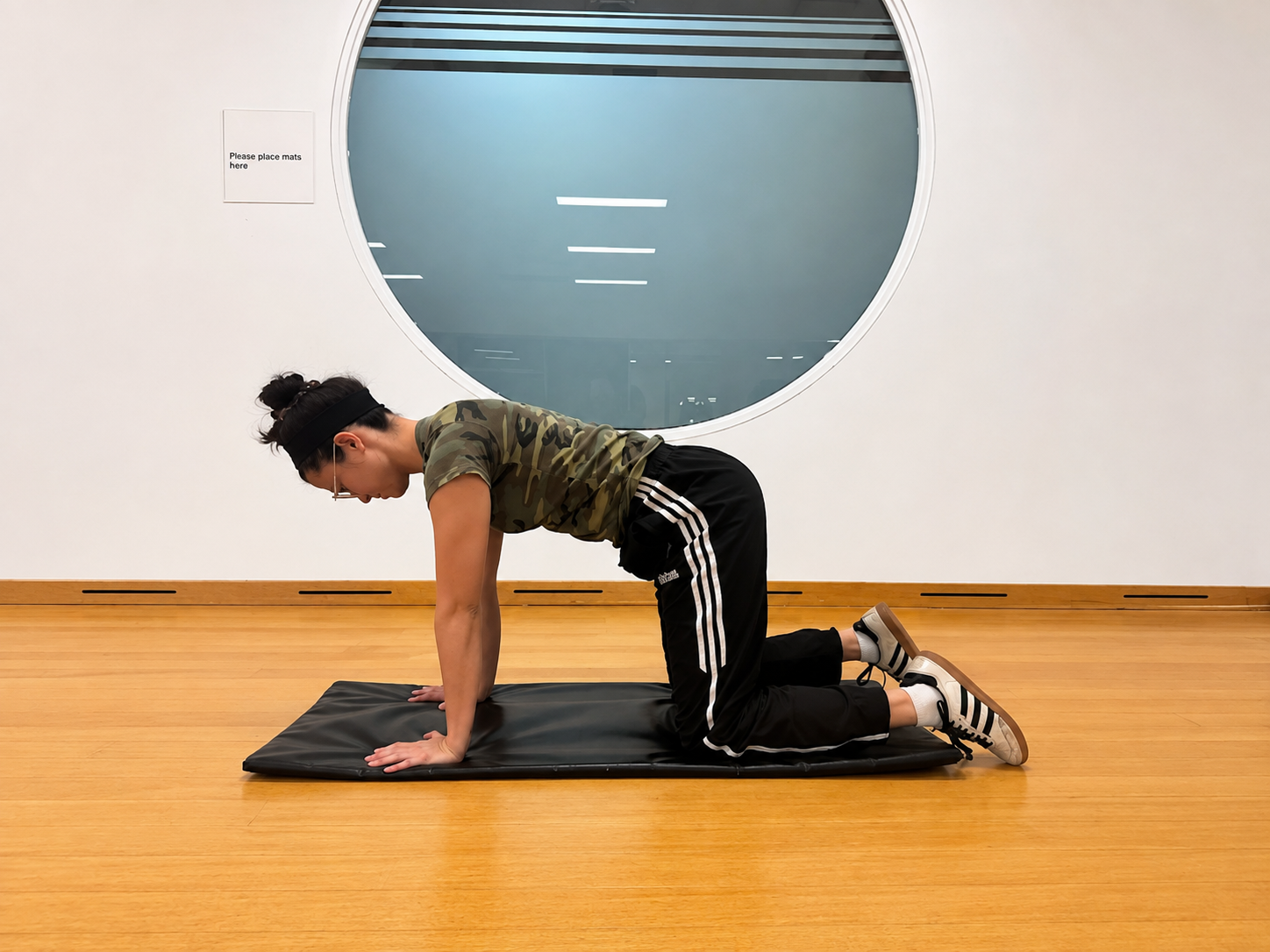
Get on all fours with your hands under your shoulders and your knees under your hips. Think of your back as a sturdy, level tabletop.
- 1. The Arms: Make a fist and reach one arm forward, roughly level with your shoulder. Keep your torso from rotating or leaning as you reach. Bring it back and try the other side.
- 2. The Legs: Slide one foot back and reach the leg away from you, keeping your hips level. Think about lengthening through the heel rather than lifting the leg as high as possible.
- 3. The Reach: If you feel steady, join the two movements together and reach the opposite arm and leg at the same time.
The Priority
Your only job here is to imagine a level bowl of water resting on your lower back and move your limbs without spilling a single drop.
The movement should come mainly from the hips and shoulders while your middle stays controlled.
If you feel a wobble, just make the movement smaller. A tiny, controlled reach is way better than a big, clunky one.
And watch that you don’t lift your heel too high towards the ceiling. The goal isn’t to get your leg as high as possible — it’s to maintain control through your pelvis and lower back while you move.
It’s a simple move, but it’s one of my favourites for getting the whole body communicating as a single unit again.
If you are dealing with that frustrating cycle of back pain and stiffness, sometimes your body needs a bit of hands-on help to break the cycle.
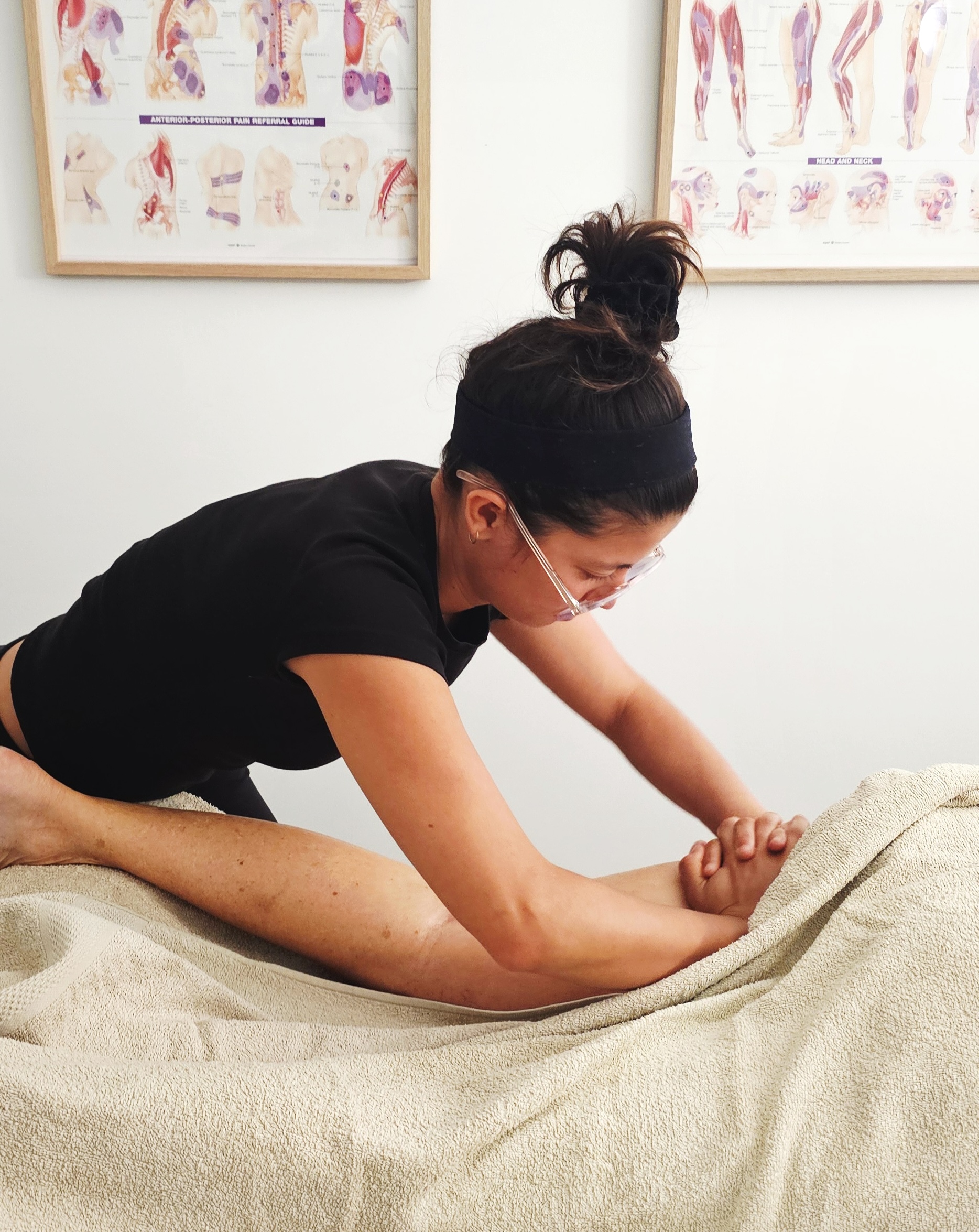
In a remedial massage session, we can look at how your body is moving, identify areas where muscles are holding tension, and work with those areas.
It can be a great way to ease discomfort and help you feel more comfortable getting down on the floor and working on these stability movements.
Feel free to book a treatment at the clinic — I’d love to help you get your body moving comfortably again.